Dr. Madeline Weld
President, Population Institute of Canada
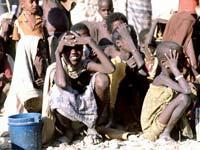
The United Nations has declared a famine in Somalia, proclaimed when child malnutrition is at 30% or higher and daily deaths are four or more children per 10,000 people.
Neighbouring countries in the Horn of Africa, while not yet technically suffering at this level, are also experiencing severe food shortages.
The global response to the Somalia famine has been called “dismal”. In addition to donor fatigue, relief is hampered by Somalia’s reputation for piracy and mayhem, with the official government barely able to control its capital, Mogadishu, and constant threats by militant groups such as the Islamist al-Shabab.
Somalia’s problems are being blamed on drought with hardly a word on the role of ongoing and rapid population growth in creating food shortages.
Yet this growth drives deforestation, in turn driving desertification which, combined with climate change, are converting forests and arable land to wasteland.
Somali women bear 6.31 children on average, resulting in a 2.3% annual growth rate and a doubling of the population – now 9.4 million – in 30.4 years. Somalia’s population is currently expected to reach 23.5 million by 2050. Globally, most of the 2.2 billion growth projected to 2050 will occur in the developing world with 36% found in the poorest of poor countries, like those now starving in the Horn of Africa.
Globally there were 1.2 acres of arable land per person in 1960. Although much land that was once forest, wetland, or meadow has been converted to farmland or other human use, there are now only 0.5 acres of arable land per person.
Virtually all of this land is being used to feed the burgeoning appetite of humanity and some of it is becoming increasingly marginal through erosion, soil depletion, and other causes.
Efforts to eliminate world hunger are doomed, with 1 billion additional mouths to feed every 12 years. Population growth is at the heart of deforestation, desertification, vanishing fisheries, and dwindling water resources.
Many of the world’s conflicts are driven by the increasingly unfavourable ratio between human numbers and available resources.
Meanwhile, the list of “failed states” — like Somalia — rises yearly with many countries unable to meet the most basic subsistence needs of their people.
The UN’s Millennium Development Goals of 2000 are not being met in those countries where population growth is outstripping efforts to feed, educate, house, and provide basic medical services, including contraception.
In 1992, the UN said: “Family planning could bring more benefits to more people at less cost than any other single technology available to the human race.”
How much longer before such sound advice is heeded by our governments, international organizations, and religious leaders?
Contraception is central to poverty reduction, educational advancement and gender equity.
The Population Institute of Canada therefore calls on the government, through the Canadian International Development Agency, to make family planning an integral part of its aid to all countries receiving Canadian development assistance.
Add new comment