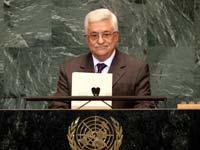
The US has said it would “veto” the resolution at this week’s UN Security Council meet for providing membership to Palestine, arguing that any statehood recognition should come through bilateral negotiations with Israel.
But 126 countries, including India have said it will support a resolution in the UN for providing membership to Palestine in the international body.
Here is a quick take on President Mahmoud Abbas request that Palestine become a United Nations member.
Q: Why are the Palestinians doing this now?
A: Eighteen years after the interim Oslo peace accords, the Palestinians say they are tired of open-ended negotiations, while Israel continues expanding West Bank and East Jerusalem settlements.
They chose September 2011 as their target, because, by then, acting Palestinian Premier Salam Fayyad’s two-year statehood building plan, launched in August 2009, was scheduled to be completed.
The World Bank and other organizations have declared that the Palestinians have met that target and are ready for statehood, having built the transparent institutions needed to govern themselves.
Also, when President Barack Obama and the so-called Quartet of Middle East peace sponsors - the United States, UN, European Union and Russia - launched short-lived direct negotiations in September 2010, they set a one-year target to those talks.
But the talks collapsed little more than three weeks after they were launched, when a 10-month moratorium on Israeli construction in the occupied West Bank expired.
Q: What is the procedure to become a UN member?
A: Acceptance as a member state requires the recommendation of the Security Council, followed by a General Assembly resolution.
The US has said it will use its veto in the Security Council, so the request to become a full member stands no chance of passing.
Nine ‘yes’ votes are needed to pass any decision in the 15-member Council. Washington still hopes to muster six other ‘no’ votes, to avoid having to use its veto and thus be perceived as the only entity which caused the Palestinian measure to fail.
Q: How can one become a non-member state?
A: The UN Charter makes no mention of that special status, enjoyed by the Vatican.
To become a ‘non-member state’ therefore does not require Security Council recommendation.
The Palestinians may, as a second step, ask the 193-member General Assembly to accept them as a non-member state.
Some 126 states, mostly in Africa, Asia, central and eastern Europe and South America, have already recognized Palestine, so they are almost certain to provide the required simple majority in the General Assembly.
Q: What is the difference between a member and a non-members state?
A: A non-member state is not allowed to vote.
Becoming a member would grant the Palestinians all the privileges and obligations of any other state in the UN, but acceptance as a ‘non-member state’ would grant them few or no additional rights. In 1998, they already received extra seats and privileges, such as the right to co-sponsor resolutions, as part of their current status as a ‘non-state observer.’
However, acceptance as a state, whether as a member or non-member, implies recognition by the world body.
Q: What are the legal implications?
A: The upgrade to a non-member state could pave the way for the Palestinians to be accepted to other key UN institutions, such as the International Criminal Court.
That would mean the Palestinians could demand the prosecution of Israelis for war crimes, which could be a serious problem for Israel.
They could demand the prosecution of former and current Israeli leaders responsible for the establishment and expansion of settlements, arguing that transferring the population of the occupying power into the occupied territory constitutes a ‘war crime.’
Q: Will becoming a member state harm peace negotiations?
A: Abbas has argued it will not. ‘Once admitted to the United Nations, our state stands ready to negotiate all the core issues of the conflict with Israel,’ he has said.
But it would be negotiating from the position of a UN member state whose territory is militarily occupied.
Israel has warned this would push negotiations years back, because it would signal to the Palestinians that they can get what they want at the UN, without making painful concessions of their own.
Past Israeli premiers have accepted the notion of a land swap to allow Israel to keep its main settlement blocs. But, if the 1967 borders are used as a starting point, the swaps any Palestinian leader may be able to concede could be too small to be acceptable for Israeli leaders and their electorates, they argue.
Add new comment