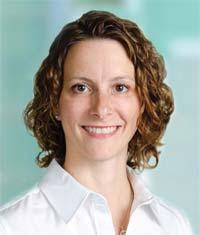
Dr. Beth Taylor’s tips on when to talk to your physician about your fertility
Dr. Taylor is a reproductive endocrinologist and medical co-director at Genesis Fertility Centre.
Most couples look forward to starting their family. They choose the time for it and then, in a few months, they’re excitedly telling friends and family that a new baby is coming. But for some couples, things just don’t happen that way. Their excitement turns to worry as, after many months, the dreamed-of pregnancy fails to happen.
Having diffi culty getting pregnant is more common than you might think.
Studies show 15% of couples have trouble conceiving and that number increases to more than 50% if the woman is over 39. Often both the husband and the wife have fertility issues that prevent them from conceiving. Fortunately, most fertility issues can be treated, and thus the majority of couples will go on to achieve their dream of having a baby. But how do you know when it’s time to get medical advice?
HERE ARE 6 REASONS YOU SHOULD CONSULT YOUR PHYSICIAN:
1. If you are under the age of 35 and have been trying to get pregnant for 12 months or more, or if you are over 35 and have been trying to conceive for 6 months or more, you should see a physician. A woman’s chance of getting pregnant starts to decrease after age 32 and decreases signifi cantly after age 37.
2. If you have been diagnosed with a condition known as endometriosis, or have had a previous pelvic infection or sexually transmitted infection, you are at increased risk of infertility.
3. If your partner has a history of infection (e.g. mumps), injury or surgery on his testicles, or diffi culty with erection or ejaculation, or if he has been diagnosed with a sperm problem.
4. If you have irregular menstrual cycles, especially when they occur infrequently (every 2, 3, or more months apart) or occur less than 25 days apart.
5. If you or your partner have a known health problem such as diabetes or high blood pressure, or a history of cancer treated with radiation or chemotherapy.
6. If there is a history of early menopause among the women in your immediate family (mother, sister), you too may be at risk for the same problem.
Remember that for the majority of couples who have diffi culty conceiving, advances in medical treatment have made it possible for them to have a baby. In BC, your consultations with a fertility specialist as well as the initial investigations for infertility are covered by MSP.
For more information, please visit www.genesis-fertility.com
Add new comment