By: Parker McClain
Special to The Post
Rapid City is a city with a metro population of 128,000 people located in the heart of South Dakota’s Black Hills and in the shadow of Mount Rushmore.
Eighty-six percent of the population identify themselves as ‘white’ … ten percent above the national demographic average.
Less than 1% of the population identify themselves as being of ‘Asian’ descent.
For TV viewers in the area, much of the only diversity they see is on the local morning news.
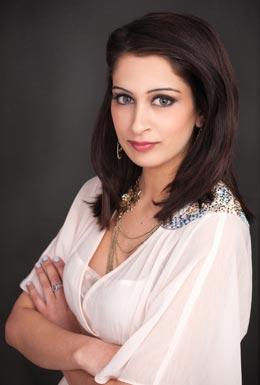
Born in Manitoba, Canada to Punjabi Sikh immigrants, Journalist PJ Randhawa is a highly visible TV anchor and reporter at Rapid City’s ABC affiliate.
After graduating from DePaul University with a master’s degree in journalism and working in some of the top network newsrooms in Chicago, Randhawa, 26, began working in Rapid City, investigating crime, social issues and human interest topics.
Her morning news segments are broadcast in five states, including North and South Dakota, Wyoming, Nebraska and Montana - to thousands of viewers.
Randhawa is the first Sikh broadcast journalist in South Dakota, and for many, she’s the first “East Indian” person they’ve ever seen.
I sat down with the TV broadcaster to find out how she is representing diversity and Sikhism in one of the most racially uniform states on the North American continent.
PJ, how did you first enter the journalism field?
There’s an old family video me singing to a Gurdas Mann song when I was four or five years old, and I guess that performance convinced my parents that I should be some kind of TV presenter. I don’t think it was the singing that persuaded them because it wasn’t great, they just recognized something in me that wanted to be seen and had something to say. It wasn’t until college that I had the confidence and technical skills to present the news. I was always a writer and actor, but terribly shy for many years.
Did you your family or you have any hesitation about being a broadcaster, as there are not many Punjabi’s in the news field?
I think to everyone, that was a big bonus. I wanted to standout and represent my heritage proudly. Growing up in Canada with friends from every background and walk of life, it was important for me to represent the changing face of an ever-shrinking world. I feel like my eyes are open to something not a lot of people see here in places like South Dakota, like how racially diverse the world really is. Having been to India a few times in my life, I’ve seen such poverty and culture that many in the Western world have their eyes closed to, so I believe that experience adds a unique perspective to my stories.
What did you do as far as education to prepare for broadcasting?
I completed my master’s degree in broadcast journalism from DePaul University in 2011. Throughout my university career, I studied filmmaking and communication. At some point, I couldn’t hide behind actors or technology anymore. I stepped in front of the camera and began to present issues that were most important to me, like crime and social justice. The truth is more interesting than anything you can make up or write in your studio or get actors to re-create. Through my investigative reporting, I’ve been able to interview top South Dakota government leaders, like Governor Dennis Daugaard, US Attorney Brenden Johnson and Attorney General Marty Jackly to explore a range of issues, including synthetic drug trafficking, cold case murders on the Indian reservations, and criminal reform legislation.
How did you end up in South Dakota?
I was fortunate enough to secure a position as a reporter here after I graduated in 2011. I would go anywhere in the world to do what I love, so it was an easy decision and I had the full support of my family to pursue my dream.
How has being Sikh affected your career so far?
My religious beliefs have always guided me to keep and open heart and open ears to the people and issues I report on. It lends itself well to being objective. That’s invaluable when you’re telling sensitive stories about murder, crime, poverty and justice. I seek to bring out subtle and impactful truths on the subjects I report, and Sikhism has taught me no one should turn away from injustice. The media has a great power to cause harm, but my beliefs as a Sikh and as a trained journalist always lead me to put people first, instead of headlines.
What advice would you have for any Sikh who wants to be a reporter or broadcaster?
Set your own limits. You will constantly be asked to change who you are. I had to shorten my real name because many people have difficulty saying it. My mom was very upset about that for a while, but some comprises are ok and some are not. I didn’t take on an Anglicized name, but chose to use my initials instead. I have also been asked repeatedly to dye my hair blond so it would look “brighter” on camera. It’s easy to lose yourself when you’re trying to please other people. You have to find your own limits, without forgetting who you are.
Was it difficult for you to report on the Wisconsin Sikh temple massacre?
It was a terrible day for everyone who values liberty and religious freedom. Unfortunately, being the only Sikh person in the area, the only thing I could do was educate my co-workers and community about the peaceful nature of Sikhism. I hope to report on Sikh issues more as I continue my career, and I think viewers will be responsive to learn more about the great things we have accomplished. I’ve been very surprised to encounter racism (although not directed towards me) in many communities here, and I believe through thoughtful reporting, some barriers raised by racial ignorance can be torn down.
What do you see for your future?
I would like to work on longer format investigative reports in a big city market on the west coast. Crime will always be my passion because it has the most severe consequences on society … just as damaging as inaction and ignorance. My inspiration will forever be my parents and their lifetime of hard work. They immigrated to Canada almost forty years ago, spent much of their life working in factories and saving every penny for tomorrow. Immigrants at that time bled for their children’s future and scarified so much for a better life. I continue to work hard and pursue not only my dreams, but the dreams of my parents.
To learn more about PJ Randhawa, visit her website at www.PJRandhawa.com.
Add new comment