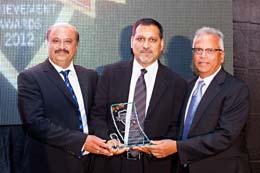
Dr. Narinder Kapany who is known as one of the founding fathers of fiber optics will be the keynote speaker at Darpan Magazine’s Extraordinary Achievement Awards 2013.
The 4th annual gala is being held on October 4th in Surrey.
Kapany who was born in 1926 in Moga, Punjab, studied physics and in the 1950’s pioneered research into fibre optics and the transmission of impulses using light waves.
He was the first scientist to demonstrate the transmission of an image through glass fibers.
Today fibre optic lines are the data highways of the Internet, enabling the transmission of billions of emails, files, and webpages on a daily basis.
Kapany was recognized as one of the seven ‘Unsung Heroes’ by Fortune magazine in their ‘Businessman of the Century’ issue in 1999.
“There were others, who had realized that glass cylinders or fibers could be used to transmit light, but Kapany was more successful than anybody else in solving the problems involved, and scientifically demonstrating the same,” said Shivanand Kanavi, a physicist turned author, who documented Kapany’s scientific contributions to the world in his book ‘Sand to Silicon.’
Between 1955 and 1965, Kapany was the lead researcher in the subject and published several papers on fiber optics.
Kapany had an affinity for science from a young age. It started when he was given a small Kodak camera from his father and was determined to understand its inner workings.
Moreover, in his early studies, he was told by a professor that light can only travel in a straight line. Kapany thought to himself, “No, that doesn’t sound right” and took it as a challenge to prove his professor wrong.
After obtaining his Bachelor of Science degree from the University of Agra, he says “there wasn’t enough to learn in India at that time so I left for Imperial College in London.” Transitioning from university in India to London was not a difficult feat for Kapany, as he says “I was young and ready to conquer the world!”
Kapany’s intended goal was to finish his degree at The Imperial College of Science, Technology and Medicine in London and then head back to India to start his own business. The idea of having his own business and being an entrepreneur was something instilled in him from a young age.
While completing his studies, he received a scholarship from The Royal Society of Engineering to do further research into fiber optics. After 18 months and several published articles, Kapany had success-fully completed his objective of demonstrating the transmission of light and images through glass fibers.
Upon the completion of his work, Kapany was ready to return to India but his professor convinced the University of London’s senate to approve Kapany for entry into the PhD program.
After earning his PhD, Kapany was approached by a professor from the University of Rochester, who convinced him to travel to the US and become a professor.
That is when Kapany’s life began in the United States, where he has been for the last 58 years making a home for his family and himself in California’s Bay Area. After Rochester, Kapany continued his research and teaching at the Illinois Institute of Technology, then he moved his family west to California.
As Kapany always had the entrepreneurial spirit, it was no surprise that he established his first business in 1960 known as ‘Optics Technology Inc.’
He served as the Chairman of the Board, President and Director of Research for this company and says “We came up with phenomenal new products and took the company public in 1967, then I sold it in 1973.”
Following this, he founded several other businesses, which focused on science, innovation and technology. 1967, he created ‘The Sikh Foundation,’ a non-profit and non-political charitable organization dedicated to promoting the culture, heritage and future of Sikhism.
Kapany would later endow a chair of Sikh Studies, under his mother’s name Kundan Kaur Kapany, at UC Santa Barbara and a chair of Opto-Electronics, and most recently a chair of Entrepreneurship, at UC Santa Cruz.
Moreover, Kapany has avidly collected Sikh art and artefacts over the last few decades and in 1999, he donated $500,000 US and 100 Sikh artefacts from his personal collection to the Asian Art Museum in San Francisco.
Article by Renu Singh-Joseph & Ameet Singh (Darpan Magazine). For more information on the Gala, go to www.darpanmagazine.com.
PHOTO CREDIT: DARPAN Magazine
Add new comment