Guest Commentary
By Roslyn Kunin
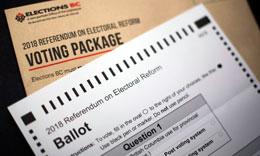
We’re in the midst of a mail-in referendum in British Columbia that could dramatically change – and not for the better – how democracy does or doesn’t work in the province.
We should really suspect that something is wrong with the proposed changes when people from both major political parties are opposed to the initiative, which is being voted on by postal ballots that must be returned by Nov 30.
The B.C. Liberals are strongly urging a No vote and three former B.C. NDP premiers have come out against proportional representation.
Glen Clark, one of those former NDP premiers, feels that those elected under proportional representation would be neither accountable nor representative. Ujjal Dosanjh worries that the referendum allows a very small minority of the population of B.C. to generate very major change. And the late Dave Barrett expressed opposition to proportional representation (PR) when the issue was raised way back in 2005.
Ian MacLeod is a retired lawyer with a long and distinguished career both professionally and in community service related to public policy. He has been awarded the Canada 125 medal and the Queen’s Golden Jubilee medal for this work. Here are his thoughts on proportional representation and the referendum:
The proportional representation (PR) referendum before B.C. today must be defeated, both due to the rigged and deeply flawed process and on the long-term damage a yes vote would do to B.C.
First, the process is rigged and fatally flawed, and fails on at least three counts:
A pig in the poke: Unlike 2005 and 2009, there was no real consultation as to the options. If we vote Yes to PR on this incomplete package, we then have to choose from three options without the real and meaningful details (size of ridings, number of members per riding, a method of selecting PR “top-ups,’ etc.) – a real pig in the poke.
A rigged choice: It’s rigged to support the extorted deal with the Green Party. PR is the only option offered, not surprisingly, the one most suited to the Greens. The Greens have never earned more than 17 percent of the popular vote (averaging about 11 percent over the past five B.C. elections), but believe that should entitle them to seats and perhaps, like now, a disproportionate balance of power.
As few as perhaps six percent of eligible B.C. voters could fundamentally change B.C.’s electoral system: There are no minimum thresholds of votes, whether by total responses or regional distribution, required to have a so-called binding vote on the new, foggy, PT model. That is problematic in three ways:
If only 30 percent of eligible voters respond (not inconceivable, as mail-in votes have notoriously low response rates), 15 percent plus one of the eligible voters will fundamentally change the structure of our voting system and impose PR on everyone else, without even knowing the model.
If the Lower Mainland votes yes and the rest of the province no, the rest of the province is screwed, being swamped by the higher population in the Lower Mainland.
If only 15 percent plus one succeed in imposing PR, marginally over one-third of those (i.e. slightly over five percent of eligible voters!) could impose one of the three un-detailed options on the whole province (ironically, akin to a perverse FPTP or first past the post on the option).
This is not fair, not reasonable and could have dangerous repercussions.
If we must change, let’s start with a fair and open discussion, like in 2005 and 2009 – not this rigged and undefined process.
In the meantime, first past the post has generally given B.C. stable governments for 146 years. It may not be perfect, but it is better than all the others (to paraphrase Winston Churchill, on democracy).”
If you have not yet mailed in your ballot, please do so. You need only make one mark to retain the current system. You don’t have to answer the second question about ranking the three bad alternative systems.
Remember, if you don’t vote, you lose your right to complain about the results and the results could be bad.
Roslyn Kunin is a consulting economist and speaker. She is an advisor to senior levels of government and an Order of Canada recipient.
Add new comment