Commentary
By Kenneth P. Green
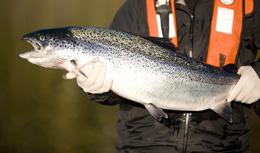
I'm gonna state this up front; I am not a dispassionate observer on this issue, because I love salmon. Specifically, I love farmed Atlantic Salmon, which is farmed extensively in British Columbia. As sushi, poached, grilled, roasted, baked, in soup, on rice, on a boat, on a train, etc.
Hence, I am disquieted to learn that the federal policy (enacted by the erstwhile Trudeau government) to effectively ban open-pen fish farming off Canada's coasts (the only economical way to farm fish) is starting to bite into Canada's fishing industry. Per Bloomberg News, "the deal will allow Grieg (a large Norwegian salmon farming corporation) an exit from Canada, where a plan by authorities to ban open net-pen salmon aquaculture in the coastal waters of British Columbia made its future there uncertain." Consequently, "Grieg Seafood ASA agreed to sell some operations in Norway and Canada to Cermaq Group AS for a total enterprise value of 10.2 billion kroner (US$990 million) as it focuses on its salmon farming in western Norway."
How did we get here?
In June 2024, Fisheries and Oceans Canada announced that "To better protect wild Pacific salmon and to promote more sustainable aquaculture practices, the Government of Canada will ban open net-pen salmon aquaculture in British Columbia coastal waters by June 30, 2029." Government will require those holding licenses to operate open net-pen salmon aquaculture facilities in the region to "fully terminate" their operations by that date.
In November 2024, the BC Salmon Farmers (trade association) hired consulting firm RIAS Inc. to estimate the economic and financial impacts of the proposed fish-farming ban. The results were not pretty. RIAS estimated that the ban would "result in significant long-term negative socioeconomic impacts in British Columbia and Canada. It will reverse and harm once positive Indigenous economic development and reconciliation efforts, and severely impact employment in areas with a history of underemployment."
To be specific, RIAS found the banning of open-net fish farming by 2029 would result in a loss of $1.17 billion in annual economic activity; $435 million in Canada's economic output (GDP); and 4,560 fewer fulltime jobs with a combined annual payroll of approximately $259 million. Further, RIAS found, the ban would cause losses of $437 million in spending with more than 1,400 vendors across B.C. and the elimination of a further 50,000 tonnes of farmed salmon production. RIAS sums it up: "An unjustified ban and push to unproven technology on salmon farming in B.C. will reduce Canadian agri-food production by 400 million healthy meals per year, eliminate B.C.'s top agri-food export, destroy 4,560 jobs, and cost Canadian taxpayers at least $9 billion."
In February 2025, the Macdonald-Laurier Institute published a report, Swimming Against the Tide, which estimated that the Atlantic salmon farming industry employs between 10,000 and 14,000 people, mostly nationally in small coastal and rural communities, including 5,800 direct full-time equivalent (FTE) jobs and total employment of more than 14,000 FTEs. Income amounts to more than $190 million with an overall economic impact of more than $600 million.
Now, here we are poised yet again to lose another pioneering Canadian industry (to environmental zealotry) that was developed for frankly environmental purposes---that is, to relieve pressure on wild salmon stocks. And to no good effect.
A recent study in the Aquaculture, Fish and Fisheries journal reviewed more than 120 studies regarding risks posed to wild salmon from salmon farming in B.C, finding "many studies overestimate the risk of pathogens transmitted from farmed salmon to wild Pacific salmon; these risks have not manifested as having significant impacts on wild Pacific salmon populations; and, therefore, the evidence better supports the conclusion that pathogens transmitted from farmed salmon are having no more than minimal impact on wild Pacific salmon populations... we hypothesize that removing open net pen salmon farms will have no detectable effect on wild Pacific salmon population productivity in relation to reference populations."
So, to sum up, the Trudeau government in 2024 opted to kill a pioneering Canadian industry founded partly to protect the environment. The decision will cost money, jobs, Aboriginal welfare, kill millions of delicious salmon dinners beloved by Canadians, and offer no environmental benefits or protect wild fish stocks.
If there was ever a regulatory fish that needed to be thrown back in the water, this is the big whopper. The Carney government should scrap the plan to kill fish farming in Canada.
Kenneth P. Green is a Fraser Institute senior fellow.
Add new comment