By Natasha Bulowski
Local Journalism Initiative Reporter
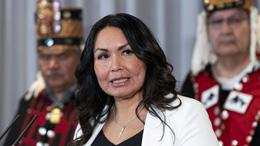
Prime Minister Mark Carney’s new Indigenous Advisory Council is shrouded in questions and criticisms, but some appointees are optimistic.
Carney announced the 11 members of the council, intended to help advance major projects, on Sept. 10. There are seven First Nation, two Métis and two Inuit representatives serving a two-year term. It is unclear how Carney selected the council members. Pierre Cuguen, spokesperson for the Privy Council Office, said they were chosen “after consultation with various stakeholders, including Indigenous partners,” but did not name them or give examples.
“The council members will help guide the Major Project Office’s work to ensure that major projects create opportunities for equity ownership and responsible resource management through meaningful participation with Indigenous Peoples,” Cuguen said.
The Assembly of First Nations called out the federal government for not consulting on the appointments. Assembly of Manitoba Chiefs Grand Chief Kyra Wilson noted there is no First Nation representative from Manitoba.
Many appointees come from a business background but Treaty 8 First Nations Grand Chief Trevor Mercredi, a vocal critic of Carney’s major projects legislation, was included.
Mercredi condemned Bill C-5 when it was rushed through Parliament in June, calling it an “ongoing pattern of legislative overreach, constitutional neglect, and Treaty violations.”
The Treaty 8 First Nations of Alberta posted a statement on Facebook stressing that Mercredi’s role does not create consensus or bind any Nation, saying, “This Council is a tool, it cannot substitute the direct consultations with First Nations.”
Mercredi said his participation will be guided by Treaty 8 Chiefs, focused on holding Canada accountable to constitutional and treaty obligations.
Treaty 8 territory spans northern BC, northern Alberta, and parts of Saskatchewan and the Northwest Territories. Alberta’s oilsands operate on Treaty 8 land, with more developments possible. Carney is considering adding the Pathways Alliance’s $16.5-billion proposal to the council’s portfolio.
The project would pipe carbon dioxide captured from oilsands sites to an underground storage site south of Cold Lake and potentially build a pipeline carrying “decarbonized” oil. Athabasca Chipewyan First Nation Chief Allan Adam has raised concerns about safety, health and environmental impacts.
The council includes Whitecap Dakota First Nation Chief Darcy Bear, former Haisla Chief Crystal Smith, and Métis Nation-Saskatchewan CEO Matt Vermette. Under Smith’s leadership, Haisla Nation became majority owner of the $6 billion Cedar LNG project.
Membertou First Nation Chief Terry Paul, known for major acquisitions in Nova Scotia, and Lorne Pelletier, senior economic advisor at the Manitoba Métis Federation, were also appointed.
Council member JP Gladu, from Bingwi Neyaashi Anishinaabek, brings extensive natural resources expertise. Despite the business-heavy lineup, Gladu said consensus won’t be easy.
“When we look at the breadth of my colleagues … we all come with our own experiences and backgrounds and we're not all going to agree,” he said.
Gladu noted that some Indigenous communities have had positive experiences with development while others have not. “The biggest challenges are going to be around speed and efficiency,” he said, emphasizing the need for communities to have enough resources to keep up with these projects.
“The First Nations that I've been talking to are excited to see projects advance, because this is their chance at some economic opportunity,” Gladu said, highlighting the Yukon-BC grid project as a “slam dunk.”
He sees the council’s role as “supplementary” to help the government understand how to work with communities, each of which has unique priorities such as equity, jobs, royalties, or land oversight.
“We're not final decision-makers on this,” he said.
“When Indigenous communities are afforded the opportunity to lead, things get done,” Gladu added.
He expects environmental and land oversight will be major concerns and stressed the need to prioritize Indigenous knowledge to rebuild trust.
Entrepreneur Victoria LaBillois, from Listuguj Mi’gmaq First Nation and a Hydro Quebec board member, said:
“For decades now, for way too long, we have been reduced to spectators to the regional economy on our traditional territories.”
LaBillois emphasized that the council doesn’t replace the federal government’s duty to consult.
“We're just prodding and asking relevant questions,” she said. “‘What about the impact of man camps and the repercussions on Indigenous women?’”
Some critics reject the council entirely.
“It feels as though this … advisory council is just another distraction away from actually talking about meaningful sovereignty and self-determination,” said Eriel Tchekwie Deranger of Indigenous Climate Action.
Deranger questioned whether the council has power and who it truly represents.
“They were not chosen by Indigenous peoples,” she said. “They were chosen by the federal colonial government.”
Vanessa Doig, one of two Inuit representatives, said Inuit organizations were consulted on who to nominate. Doig is assistant director at Makivvik, representing northern Nunavik. The other Inuit appointee is Christy Sinclair of Nunavut Tunngavik Inc.
Deranger fears the council will allow the government to “tick that checkbox of consultation” rather than achieve free, prior and informed consent as defined in the UN Declaration on the Rights of Indigenous Peoples (UNDRIP).
She also noted that Gladu sits on Suncor’s board, calling it a conflict of interest. Gladu said he would recuse himself from any council discussions involving Suncor or other companies he’s linked to.
“This is about a system and a structure,” Deranger said, warning the council could fast-track projects without true accountability.
On Sept. 11, Indigenous Services Minister Mandy Gull-Masty said the council isn’t meant to represent every nation but to gather diverse voices to advise on projects.
Doig said joining was about influencing the process:
“The risk was higher to not be involved in this process than it was to be involved,” she said, adding that the council will remind the government of obligations, including the duty to consult.
Climate change will be a major focus, especially for northern communities.
“There's a domino effect for any action that's taken in the north,” Doig said, stressing the need to minimize negative impacts on food security, transportation, housing, and cultural practices.
Advisory council member Kluane Adamek brings experience on national files including climate change, environment, water, modern treaties and health from her time as AFN Yukon Regional Chief.— Canada’s National Observer with files from The Canadian Press
Add new comment