Commentary
Canada’s 2022 Indo-Pacific Strategy promised stronger ties with Asia. A month into a business trip across the region, I can see Canada is making progress, but it still has a long way to go.
The federal strategy prioritized relations with Asia and injected $2.3 billion of investments into it over five years. Though war in Europe, costing Canada 10 times more, has dwarfed that commitment, new initiatives in Asia have included an expanded diplomatic footprint, incentives to encourage deeper commercial ties, and measures to increase military-security cooperation. All to the good.
One example of progress is the recent deepening of ties with Indonesia.
Though the strategy remains a work in progress, the signing of a trade pact between Canada and Indonesia on Sept. 24 marks a significant step forward and will hopefully prompt more Canadian businesses to consider the opportunities. The fact that the two countries also recently signed a memorandum of understanding on closer defence cooperation suggests that we may have found an anchor relationship in the region.
Having been stationed here twice, I may be biased, but Indonesia is, after all, the fourth most populous country in the world. It is demographically young and projected to become a top 10 global economy over the coming decades. It not only imports Canadian wheat for the world’s largest flour mill at Bogasari, a major food manufacturer in Jakarta, but was also a surprisingly successful market for BlackBerry once upon a time.
Less developed relationships like this can add to our traditional partnerships in Asia. Japan and South Korea are already major partners, capable of both deploying investment capital and buying a range of our exports from agri-food, energy, minerals and technology, to financial, legal and other services.
Frankly, however, positive engagement with the region as a whole will be constrained until relations with China and India are mended. Given that most Asian countries are intertwined with these giants, we should at least resist being drawn into even deeper conflict with them. That won’t be easy in the case of China’s tensions with the U.S. over both Taiwan and the Philippines, since the U.S. is our indispensable partner above all.
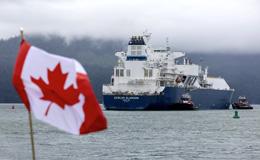
Meanwhile, another bilateral relationship to take seriously in the region is Malaysia. It has already played a key role in the Canadian energy sector with a 25-per-cent stake in LNG Canada by national energy company Petronas, Malaysia’s state-owned oil and gas firm. Having worked to attract this investment during my time as ambassador in Kuala Lumpur between 2010 and 2012, I felt relieved this past July when, at long last, over a dozen years later, the first Petronas shipment of LNG went from B.C.’s Kitimat port to Japan.
Canada is now actively wooing investors for phase two of LNG development, which will be important to the Canadian economy. My meetings in Kuala Lumpur suggest that further Malaysian investment is by no means automatic. Petronas has just been forced to cut 5,000 jobs, or 10 percent of its workforce. The company also recently sold 20 per cent of its Canadian assets to Saudi and American parties. Attracting further Malaysian investment will require careful attention to the local situation and the various stakeholder interests at play, as we learned in our work to attract the initial investment.
The same will be true for cooperation on renewable energy, especially small modular reactors (SMR), which are compact nuclear power units still in early commercial development. There is interest in SMR technology from Malaysia, as well as Indonesia and other Asian countries. Canada needs to get moving if it wants to succeed over the competition.
On a side note, the fact that Malaysian executives must obtain visas to enter Canada, and need to have them processed at our office in rival Singapore, no less, is deeply resented and therefore not helpful to Canadian interests.
All too often dismissed with a shrug, visitor visa requirements for several key partners in Asia, including Indonesia and Malaysia, need to be eased if we are to make good on our ambitions for closer relations, not to mention boost our tourism sector. These are not countries teeming with potential refugees or posing significant security risks. Though coordination with U.S. visa requirements is a factor, we need to act in our own interests.
In sum, after a month of discussions in the region, it’s clear that Canada has taken some positive steps to deepen engagement. But while new offices, trade missions, conferences and trade agreements are all good, in the final analysis, Canadian jobs and growth depend on companies signing sales contracts and attracting capital investments for new commercial projects. It’s also clear that other countries aren’t standing still. We have to hustle if we want to be successful in a very competitive environment.
Randolph Mank is a former three-time Canadian ambassador and is a fellow of the Canadian Global Affairs Institute, the Triple Helix Partnership for Defence Innovation, and the Balsillie School of International Affairs.
Canada’s Top Trading Partners in Asia
Canada's top trading partners in Asia as of 2025 are primarily China, Japan, South Korea, India, Singapore, Vietnam, Malaysia, and Indonesia.
• China is the largest Asian trade partner, with two-way merchandise trade totalling approximately $118.7 billion in 2024-2025. Canada exports agricultural products, wood pulp, and minerals to China while importing manufactured goods, electronics, and consumer goods. Trade shows a growing import surplus from China.
• Japan is a key export destination for Canadian products like seafood, wood products, and agricultural goods (canola), with significant imports from Japan including machinery and automobiles. Trade with Japan is supported by agreements like the Comprehensive and Progressive Agreement for Trans-Pacific Partnership (CPTPP).
• South Korea is an important partner for British Columbia and Canada in energy (LNG shipments) and other sectors, contributing to growing trade diversification in the Asia-Pacific.
• India is Canada’s seventh-largest goods and services trading partner, with two-way trade nearing $34 billion in 2024, including agriculture, critical minerals, and energy.
• ASEAN countries collectively form the fourth largest merchandise trading partner for Canada, with growing trade volumes and ongoing free trade agreement negotiations that aim to further deepen economic ties with countries such as Singapore, Vietnam, Malaysia, and Indonesia.
Add new comment