By Mata Press Service
Students are warning that British Columbia’s newly announced review of the public post-secondary system could lead to higher tuition fees, as the Province searches for ways to stabilize institutions facing mounting financial deficits.
The BC Federation of Students issued a statement following the government’s announcement of an independent sector-wide sustainability review, saying the scope and framing of the process point toward students being asked to shoulder more of the financial burden.
The review, launched by the Government of British Columbia, is intended to develop short- and long-term solutions to what it describes as an unprecedented financial crisis affecting B.C.’s 25 public post-secondary institutions. The terms of the review include governance, operations, program delivery, financial sustainability and tuition policy. The Province has also said that any new revenue sources identified through the review will not involve additional government funding.
Student leaders say that combination raises red flags.
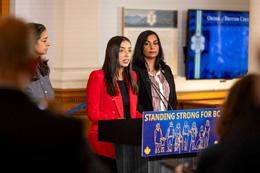
“This only leads us to conclude one thing: the government is considering removing, weakening or making exceptions to the Tuition Limit Policy, and allowing students to cover the growing deficits faced by institutions,” said Debi Herrera Lira, chairperson of the BC Federation of Students. “That policy has been protecting affordability for students and families since 2005.”
The pushback comes as financial conditions across the sector deteriorate rapidly. According to government figures, 19 of the province’s 25 public post-secondary institutions are forecasting at least one annual deficit over the next three years. For the first time, the system as a whole is also projecting a consolidated deficit position.
The Province has pointed to growth in its operating grants as evidence of support, noting funding has increased by $1.2 billion since 2016-17. Student groups counter that most of that increase has gone toward negotiated wage settlements and targeted seat expansions, not to offset inflation, aging infrastructure, rising borrowing costs or expanding institutional mandates.
They argue that operating funding has not kept pace with real costs, a problem identified in a previous sector-wide funding review launched in 2022. That process concluded that public institutions were becoming increasingly reliant on international student tuition to balance their budgets. The review was subsequently dropped before completion.
That reliance is now a central vulnerability. Federal immigration policy changes introduced in 2024 sharply reduced the number of international study permits issued, cutting an estimated $300 million annually from post-secondary revenues in B.C.
Institutions have already responded with cuts. More than 80 academic programs across the province have been cancelled, suspended or paused. Over 900 staff positions have been eliminated through layoffs, early retirements and hiring freezes. Campuses have reduced administrative budgets, consolidated facilities and closed underused spaces.
Student groups say those measures are already increasing the cost of education in indirect ways by delaying graduations, limiting course availability and weakening support services. They warn that tuition increases would compound those impacts.
On average, an undergraduate student in British Columbia pays close to $27,000 in tuition fees over the course of a degree. Graduates leave school with an average debt load of about $32,800, before factoring in housing, food, transportation and textbook costs.
As the Province positions itself as a driver of national economic growth through its Look West strategy, students argue that higher tuition would undermine workforce development goals by discouraging enrolment and completion in fields facing labour shortages, including health care, skilled trades, education and STEM professions.
The Province says the review is necessary to ensure long-term sustainability and alignment with labour market needs. It has appointed former deputy minister Don Avison, KC, to lead the independent process and deliver recommendations by March 15, 2026.
Students have also expressed concern about the review timeline, noting that key phases of consultation are compressed into just a few months. They say a rushed process risks producing recommendations that fail to address the root causes of the funding crisis.
The BC Federation of Students says it will participate fully in the review but maintains that affordability must remain a core principle.
“We are committed to changes that stabilize institutions,” Herrera Lira said. “But students cannot afford to pay for a system that has been chronically underfunded.”
Add new comment